BEGIN:VCALENDAR
VERSION:2.0
PRODID:-//jEvents 2.0 for Joomla//EN
CALSCALE:GREGORIAN
METHOD:PUBLISH
BEGIN:VTIMEZONE
TZID:Australia/Sydney
BEGIN:STANDARD
DTSTART:20170404T193000
RDATE:20171001T030000
TZOFFSETFROM:+1100
TZOFFSETTO:+1000
TZNAME:Australia/Sydney AEST
END:STANDARD
BEGIN:STANDARD
DTSTART:20180401T020000
RDATE:20181007T030000
TZOFFSETFROM:+1100
TZOFFSETTO:+1000
TZNAME:Australia/Sydney AEST
END:STANDARD
BEGIN:STANDARD
DTSTART:20190407T020000
RDATE:20191006T030000
TZOFFSETFROM:+1100
TZOFFSETTO:+1000
TZNAME:Australia/Sydney AEST
END:STANDARD
BEGIN:STANDARD
DTSTART:20200405T020000
RDATE:20201004T030000
TZOFFSETFROM:+1100
TZOFFSETTO:+1000
TZNAME:Australia/Sydney AEST
END:STANDARD
BEGIN:STANDARD
DTSTART:20210404T020000
RDATE:20211003T030000
TZOFFSETFROM:+1100
TZOFFSETTO:+1000
TZNAME:Australia/Sydney AEST
END:STANDARD
BEGIN:STANDARD
DTSTART:20220403T020000
RDATE:20221002T030000
TZOFFSETFROM:+1100
TZOFFSETTO:+1000
TZNAME:Australia/Sydney AEST
END:STANDARD
BEGIN:STANDARD
DTSTART:20230402T020000
RDATE:20231001T030000
TZOFFSETFROM:+1100
TZOFFSETTO:+1000
TZNAME:Australia/Sydney AEST
END:STANDARD
BEGIN:STANDARD
DTSTART:20240407T020000
RDATE:20241006T030000
TZOFFSETFROM:+1100
TZOFFSETTO:+1000
TZNAME:Australia/Sydney AEST
END:STANDARD
BEGIN:STANDARD
DTSTART:20250406T020000
RDATE:20251005T030000
TZOFFSETFROM:+1100
TZOFFSETTO:+1000
TZNAME:Australia/Sydney AEST
END:STANDARD
BEGIN:STANDARD
DTSTART:20260405T020000
RDATE:20261004T030000
TZOFFSETFROM:+1100
TZOFFSETTO:+1000
TZNAME:Australia/Sydney AEST
END:STANDARD
BEGIN:STANDARD
DTSTART:20270404T020000
RDATE:20271003T030000
TZOFFSETFROM:+1100
TZOFFSETTO:+1000
TZNAME:Australia/Sydney AEST
END:STANDARD
BEGIN:STANDARD
DTSTART:20280402T020000
RDATE:20281001T030000
TZOFFSETFROM:+1100
TZOFFSETTO:+1000
TZNAME:Australia/Sydney AEST
END:STANDARD
BEGIN:DAYLIGHT
DTSTART:20171001T030000
RDATE:20180401T020000
TZOFFSETFROM:+1000
TZOFFSETTO:+1100
TZNAME:Australia/Sydney AEDT
END:DAYLIGHT
BEGIN:DAYLIGHT
DTSTART:20181007T030000
RDATE:20190407T020000
TZOFFSETFROM:+1000
TZOFFSETTO:+1100
TZNAME:Australia/Sydney AEDT
END:DAYLIGHT
BEGIN:DAYLIGHT
DTSTART:20191006T030000
RDATE:20200405T020000
TZOFFSETFROM:+1000
TZOFFSETTO:+1100
TZNAME:Australia/Sydney AEDT
END:DAYLIGHT
BEGIN:DAYLIGHT
DTSTART:20201004T030000
RDATE:20210404T020000
TZOFFSETFROM:+1000
TZOFFSETTO:+1100
TZNAME:Australia/Sydney AEDT
END:DAYLIGHT
BEGIN:DAYLIGHT
DTSTART:20211003T030000
RDATE:20220403T020000
TZOFFSETFROM:+1000
TZOFFSETTO:+1100
TZNAME:Australia/Sydney AEDT
END:DAYLIGHT
BEGIN:DAYLIGHT
DTSTART:20221002T030000
RDATE:20230402T020000
TZOFFSETFROM:+1000
TZOFFSETTO:+1100
TZNAME:Australia/Sydney AEDT
END:DAYLIGHT
BEGIN:DAYLIGHT
DTSTART:20231001T030000
RDATE:20240407T020000
TZOFFSETFROM:+1000
TZOFFSETTO:+1100
TZNAME:Australia/Sydney AEDT
END:DAYLIGHT
BEGIN:DAYLIGHT
DTSTART:20241006T030000
RDATE:20250406T020000
TZOFFSETFROM:+1000
TZOFFSETTO:+1100
TZNAME:Australia/Sydney AEDT
END:DAYLIGHT
BEGIN:DAYLIGHT
DTSTART:20251005T030000
RDATE:20260405T020000
TZOFFSETFROM:+1000
TZOFFSETTO:+1100
TZNAME:Australia/Sydney AEDT
END:DAYLIGHT
BEGIN:DAYLIGHT
DTSTART:20261004T030000
RDATE:20270404T020000
TZOFFSETFROM:+1000
TZOFFSETTO:+1100
TZNAME:Australia/Sydney AEDT
END:DAYLIGHT
BEGIN:DAYLIGHT
DTSTART:20271003T030000
RDATE:20280402T020000
TZOFFSETFROM:+1000
TZOFFSETTO:+1100
TZNAME:Australia/Sydney AEDT
END:DAYLIGHT
BEGIN:DAYLIGHT
DTSTART:20281001T030000
RDATE:20290401T020000
TZOFFSETFROM:+1000
TZOFFSETTO:+1100
TZNAME:Australia/Sydney AEDT
END:DAYLIGHT
END:VTIMEZONE
BEGIN:VEVENT
UID:277b81aebd174e2f342ae9d2c52af027
CATEGORIES:Guest Speaker Night
CREATED:20170824T200357
SUMMARY:Guest Speaker - Dr Lee Spitler - Macquarie University and AAO
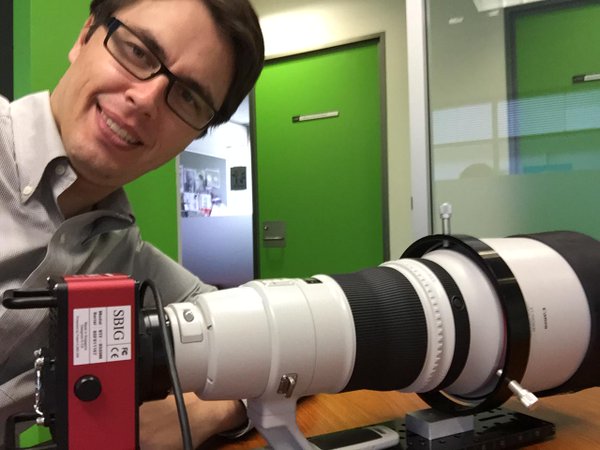
DESCRIPTION:<h2>The Huntsman Telephoto Array</h2><p>I am really excited about my Huntsm
 an observing system, which uses off-the-shelf Canon lenses to see some of t
 he faintest galactic structures ever seen before. We can use this informati
 on to determine the detailed growth history of galaxies. I am also leading 
 efforts to launch a similar system into space, which will map out nearly 13
  billion years of cosmic history.</p><h2><img src="images/articles/Lee_Spit
 ler.jpg" alt="Dr Lee Spitler" style="margin-right: 10px; float: left;" />Dr
  Lee Spitler</h2><h4>Senior Lecturer, Macquarie University and Australian A
 stronomical Observatory</h4><div>&nbsp;</div><div style="color: #444444; fo
 nt-family: Verdana, Helvetica, Arial, sans-serif; font-size: 13.3333px;">I 
 led image analysis for the&nbsp;<a href="http://zfourge.tamu.edu/" rel="nof
 ollow" style="color: #333333;">ZFOURGE survey</a>, a 45-night campaign over
  2 years on the 6.5-metre Magellan Baade telescope in Chile. We cataloged ~
 60,000 galaxies, including galaxies as far as 13 billion light years. This 
 is the&nbsp;most precise study of the distant universe ever conducted.</div
 ><div style="color: #444444; font-family: Verdana, Helvetica, Arial, sans-s
 erif; font-size: 13.3333px;">&nbsp;</div><div style="color: #444444; font-f
 amily: Verdana, Helvetica, Arial, sans-serif; font-size: 13.3333px;">As a p
 art of ZFOURGE, I discovered one of the most&nbsp;<a href="https://arxiv.or
 g/abs/1112.2691" rel="nofollow" style="color: #333333;">distant galaxy clus
 ters</a>. This fascinating galaxy "city" triggered a new observational camp
 aign named&nbsp;<a href="http://zfire.swinburne.edu.au/" rel="nofollow" sty
 le="color: #333333;">ZFIRE</a>&nbsp;using the 10-metre Keck telescopes. We 
 are looking for signs that the crowded environment of a galaxy city impacte
 d the galaxies within it.</div><div style="color: #444444; font-family: Ver
 dana, Helvetica, Arial, sans-serif; font-size: 13.3333px;">&nbsp;</div><div
  style="color: #444444; font-family: Verdana, Helvetica, Arial, sans-serif;
  font-size: 13.3333px;">My PhD work focused on analysing some of the best i
 maging ever taken of nearby galaxies from the Subaru and Hubble Space Teles
 copes for the&nbsp;<a href="http://sluggs.swin.edu.au/" rel="nofollow" styl
 e="color: #333333;">SLUGGS project</a>. My imaging lead to the discovery of
  many thousands of globular star clusters, which we targeted with the Keck 
 telescope to understand how much dark matter is in these galaxies.</div><di
 v>&nbsp;</div><div>&nbsp;</div><div><p>Dr Spitler recieved a BSc with Honor
 s in Computer Science from the University of California, Santa Cruz, USA, a
 nd a&nbsp;PhD in Astrophysics from&nbsp;Swinburne University, Melbourne, Au
 stralia</p></div><div>In 2015, Dr Spitler won the Macquarie University awar
 d for Research Excellence for Early Career Researcher, and was nominated as
  a finalist for a 2015 Eureka Prize</div>
X-ALT-DESC;FMTTYPE=text/html:<h2>The Huntsman Telephoto Array</h2><p>I am really excited about my Huntsm
 an observing system, which uses off-the-shelf Canon lenses to see some of t
 he faintest galactic structures ever seen before. We can use this informati
 on to determine the detailed growth history of galaxies. I am also leading 
 efforts to launch a similar system into space, which will map out nearly 13
  billion years of cosmic history.</p><h2><img src="https://www.sasi.net.au/
 images/articles/Lee_Spitler.jpg" alt="Dr Lee Spitler" style="margin-right: 
 10px; float: left;" />Dr Lee Spitler</h2><h4>Senior Lecturer, Macquarie Uni
 versity and Australian Astronomical Observatory</h4><div>&nbsp;</div><div s
 tyle="color: #444444; font-family: Verdana, Helvetica, Arial, sans-serif; f
 ont-size: 13.3333px;">I led image analysis for the&nbsp;<a href="http://zfo
 urge.tamu.edu/" rel="nofollow" style="color: #333333;">ZFOURGE survey</a>, 
 a 45-night campaign over 2 years on the 6.5-metre Magellan Baade telescope 
 in Chile. We cataloged ~60,000 galaxies, including galaxies as far as 13 bi
 llion light years. This is the&nbsp;most precise study of the distant unive
 rse ever conducted.</div><div style="color: #444444; font-family: Verdana, 
 Helvetica, Arial, sans-serif; font-size: 13.3333px;">&nbsp;</div><div style
 ="color: #444444; font-family: Verdana, Helvetica, Arial, sans-serif; font-
 size: 13.3333px;">As a part of ZFOURGE, I discovered one of the most&nbsp;<
 a href="https://arxiv.org/abs/1112.2691" rel="nofollow" style="color: #3333
 33;">distant galaxy clusters</a>. This fascinating galaxy "city" triggered 
 a new observational campaign named&nbsp;<a href="http://zfire.swinburne.edu
 .au/" rel="nofollow" style="color: #333333;">ZFIRE</a>&nbsp;using the 10-me
 tre Keck telescopes. We are looking for signs that the crowded environment 
 of a galaxy city impacted the galaxies within it.</div><div style="color: #
 444444; font-family: Verdana, Helvetica, Arial, sans-serif; font-size: 13.3
 333px;">&nbsp;</div><div style="color: #444444; font-family: Verdana, Helve
 tica, Arial, sans-serif; font-size: 13.3333px;">My PhD work focused on anal
 ysing some of the best imaging ever taken of nearby galaxies from the Subar
 u and Hubble Space Telescopes for the&nbsp;<a href="http://sluggs.swin.edu.
 au/" rel="nofollow" style="color: #333333;">SLUGGS project</a>. My imaging 
 lead to the discovery of many thousands of globular star clusters, which we
  targeted with the Keck telescope to understand how much dark matter is in 
 these galaxies.</div><div>&nbsp;</div><div>&nbsp;</div><div><p>Dr Spitler r
 ecieved a BSc with Honors in Computer Science from the University of Califo
 rnia, Santa Cruz, USA, and a&nbsp;PhD in Astrophysics from&nbsp;Swinburne U
 niversity, Melbourne, Australia</p></div><div>In 2015, Dr Spitler won the M
 acquarie University award for Research Excellence for Early Career Research
 er, and was nominated as a finalist for a 2015 Eureka Prize</div>
DTSTAMP:20260622T200837
DTSTART;TZID=Australia/Sydney:20180405T193000
DTEND;TZID=Australia/Sydney:20180405T213000
SEQUENCE:0
TRANSP:OPAQUE
END:VEVENT
END:VCALENDAR