BEGIN:VCALENDAR
VERSION:2.0
PRODID:-//jEvents 2.0 for Joomla//EN
CALSCALE:GREGORIAN
METHOD:PUBLISH
BEGIN:VTIMEZONE
TZID:Australia/Sydney
BEGIN:STANDARD
DTSTART:20200901T193000
RDATE:20201004T030000
TZOFFSETFROM:+1100
TZOFFSETTO:+1000
TZNAME:Australia/Sydney AEST
END:STANDARD
BEGIN:STANDARD
DTSTART:20210404T020000
RDATE:20211003T030000
TZOFFSETFROM:+1100
TZOFFSETTO:+1000
TZNAME:Australia/Sydney AEST
END:STANDARD
BEGIN:STANDARD
DTSTART:20220403T020000
RDATE:20221002T030000
TZOFFSETFROM:+1100
TZOFFSETTO:+1000
TZNAME:Australia/Sydney AEST
END:STANDARD
BEGIN:STANDARD
DTSTART:20230402T020000
RDATE:20231001T030000
TZOFFSETFROM:+1100
TZOFFSETTO:+1000
TZNAME:Australia/Sydney AEST
END:STANDARD
BEGIN:STANDARD
DTSTART:20240407T020000
RDATE:20241006T030000
TZOFFSETFROM:+1100
TZOFFSETTO:+1000
TZNAME:Australia/Sydney AEST
END:STANDARD
BEGIN:STANDARD
DTSTART:20250406T020000
RDATE:20251005T030000
TZOFFSETFROM:+1100
TZOFFSETTO:+1000
TZNAME:Australia/Sydney AEST
END:STANDARD
BEGIN:STANDARD
DTSTART:20260405T020000
RDATE:20261004T030000
TZOFFSETFROM:+1100
TZOFFSETTO:+1000
TZNAME:Australia/Sydney AEST
END:STANDARD
BEGIN:STANDARD
DTSTART:20270404T020000
RDATE:20271003T030000
TZOFFSETFROM:+1100
TZOFFSETTO:+1000
TZNAME:Australia/Sydney AEST
END:STANDARD
BEGIN:STANDARD
DTSTART:20280402T020000
RDATE:20281001T030000
TZOFFSETFROM:+1100
TZOFFSETTO:+1000
TZNAME:Australia/Sydney AEST
END:STANDARD
BEGIN:DAYLIGHT
DTSTART:20201004T030000
RDATE:20210404T020000
TZOFFSETFROM:+1000
TZOFFSETTO:+1100
TZNAME:Australia/Sydney AEDT
END:DAYLIGHT
BEGIN:DAYLIGHT
DTSTART:20211003T030000
RDATE:20220403T020000
TZOFFSETFROM:+1000
TZOFFSETTO:+1100
TZNAME:Australia/Sydney AEDT
END:DAYLIGHT
BEGIN:DAYLIGHT
DTSTART:20221002T030000
RDATE:20230402T020000
TZOFFSETFROM:+1000
TZOFFSETTO:+1100
TZNAME:Australia/Sydney AEDT
END:DAYLIGHT
BEGIN:DAYLIGHT
DTSTART:20231001T030000
RDATE:20240407T020000
TZOFFSETFROM:+1000
TZOFFSETTO:+1100
TZNAME:Australia/Sydney AEDT
END:DAYLIGHT
BEGIN:DAYLIGHT
DTSTART:20241006T030000
RDATE:20250406T020000
TZOFFSETFROM:+1000
TZOFFSETTO:+1100
TZNAME:Australia/Sydney AEDT
END:DAYLIGHT
BEGIN:DAYLIGHT
DTSTART:20251005T030000
RDATE:20260405T020000
TZOFFSETFROM:+1000
TZOFFSETTO:+1100
TZNAME:Australia/Sydney AEDT
END:DAYLIGHT
BEGIN:DAYLIGHT
DTSTART:20261004T030000
RDATE:20270404T020000
TZOFFSETFROM:+1000
TZOFFSETTO:+1100
TZNAME:Australia/Sydney AEDT
END:DAYLIGHT
BEGIN:DAYLIGHT
DTSTART:20271003T030000
RDATE:20280402T020000
TZOFFSETFROM:+1000
TZOFFSETTO:+1100
TZNAME:Australia/Sydney AEDT
END:DAYLIGHT
BEGIN:DAYLIGHT
DTSTART:20281001T030000
RDATE:20290401T020000
TZOFFSETFROM:+1000
TZOFFSETTO:+1100
TZNAME:Australia/Sydney AEDT
END:DAYLIGHT
END:VTIMEZONE
BEGIN:VEVENT
UID:9a08672ba8294d46ecbe8ed30058a82e
CATEGORIES:Guest Speaker Night
CREATED:20210404T175050
SUMMARY:Guest Speaker - Dr Maria Cunningham - UNSW
LOCATION:: Online
DESCRIPTION:Understanding how stars form - new information from large radio surveysGala
xies are the building blocks of the Universe. Stars, in their births and de
aths, shape galaxy evolution, and hence understanding how stars form is imp
ortant.\nAs stars form deep in molecular clouds, we can only observe the pr
ocess of their formation at radio wavelengths, which are transparent to the
dust that molecular clouds contain.\nIn this talk I will explain how star
formation works, what we do and do not know, and how large-scale automated
telescope surveys coupled with automated analysis techniques are driving fo
rward our understanding of star formation and galaxy evolution.\nDr Maria C
unninghamI gained my PhD jointly with CSIRO ATNF and what is now WSU. While
undertaking my PhD I also ran the Public Access Observatory of WSU, at the
Werrington North campus. In 2002 I accepted a lectureship at UNSW, in the
School of Physics, and there I have stayed. I have been lucky enough to use
some of the world's premier research facilities, such as the Atacama Large
Millimetre Array ALMA. However, I have a strong interest in both teaching
and research, and I am pretty handy with teaching-level optical telescopes
on a cold clear night. They are invaluable for interesting students in scie
nce.\n
X-ALT-DESC;FMTTYPE=text/html:Understanding how stars form - new information from large radio surveys
Galaxies are the building blocks of the Universe. Stars, in their b
irths and deaths, shape galaxy evolution, and hence understanding how stars
form is important.
As stars form deep in molecular clouds, we can on
ly observe the process of their formation at radio wavelengths, which are t
ransparent to the dust that molecular clouds contain.
In this talk I
will explain how star formation works, what we do and do not know, and how
large-scale automated telescope surveys coupled with automated analysis tec
hniques are driving forward our understanding of star formation and galaxy
evolution.
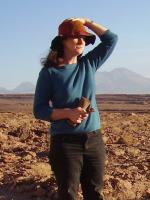 Dr Maria Cunningham
I gained my PhD jointly with CSIRO A
TNF and what is now WSU. While undertaking my PhD I also ran the Public Acc
ess Observatory of WSU, at the Werrington North campus. In 2002 I accepted
a lectureship at UNSW, in the School of Physics, and there I have stayed. I
have been lucky enough to use some of the world's premier research facilit
ies, such as the Atacama Large Millimetre Array ALMA. However, I have a str
ong interest in both teaching and research, and I am pretty handy with teac
hing-level optical telescopes on a cold clear night. They are invaluable fo
r interesting students in science.
DTSTAMP:20261025T131638
DTSTART;TZID=Australia/Sydney:20210902T193000
DTEND;TZID=Australia/Sydney:20210902T213000
SEQUENCE:0
TRANSP:OPAQUE
END:VEVENT
END:VCALENDAR